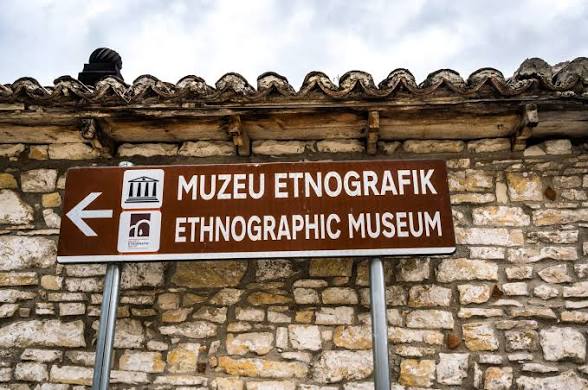
After 3 years of restoration and preparation, the Ethnographic Museum of Berat reopens to welcome visitors back in one of Albania’s most meaningful cultural spaces. Located in the historic Llavda residence, the museum keeps around 1,300 objects that narrate the story of the civic life of Berat, craftsmanship, family traditions, and everyday culture across generations.
The reopening is more than the return of an exhibition to a museum. It again points to the living heritage of Berat, a city admired internationally for its historic architecture, traditional neighborhoods, and strong cultural identity. The museum offers visitors a direct contact with the way families in Berat lived, worked, entertained guests, and kept their customs by means of domestic objects, craft tools, clothing, ornaments, and reconstructed spaces.
Across the Ages: A Home
The Ethnographic Museum is housed in the monumental Llavda house, a first-category cultural monument, and opened in 1979 and reflects Berat’s distinctive architecture. The building itself is an important part of the experience, with its rooms, courtyard, woodwork, and traditional layout helping visitors to understand the social world behind the objects on display.
In June 2023, the full restoration of the museum started. After this, work began to redesign and re-musemize the exhibition before it was opened again to the public. The restoration was funded by the European Union, with the funds secured by the Berat County Council, and local cultural institutions worked to give the museum a more prominent role in the city’s cultural and tourism offer.
Restoring a historic house is never simply a matter of fixing walls or replacing damaged features. It is about protecting the original character, making the building safe, accessible, and appropriate for displaying valuable collections.” The restoration of the traditional houses of Berat has a particular importance, as these houses are closely related to the identity of the city. Their architecture is a product of centuries of adaptation to local climate, family life, craftsmanship, and urban traditions.
The refurbished museum gives residents and travelers alike a reason to look beyond Berat’s famed views and stone roads. The museum opens a domestic setting to visitors to experience history through the details of everyday life.
1,300 Tales of Berat
The museum’s collection consists of about 1300 objects that are a record of the culture, traditions, crafts, and civic lifestyle of the Berat region. These artifacts are important because they show history from the viewpoint of everyday life and not just from the perspective of major political events or famous historical figures.
“Sometimes day-to-day things reveal more about a community than a written date or official document can. A copper pot might speak of culinary traditions and craftsmanship. A woven textile can demonstrate the value of patience, artistic expression, and family labor. Traditional clothes and jewelry could express a person’s social status, local tastes, and the ceremonial customs that marked key moments in a person’s life.
The collection includes objects associated with household work, food preparation, textile making, trade, personal adornment, and family organization. Together these objects provide a broader view of Berat as a city with a vibrant civic culture, developed crafts, and connections between domestic life and the local marketplace.
The museum can help youngsters feel more part of history. Rather than just reading about it in books, they get to see the actual tools and places that were part of the lives of the previous generations. Such an encounter helps to make cultural heritage something understandable, visible, and relevant.
A Stroll Through Traditional Life
The museum is located in a two-story traditional Berat house. On the ground floor, visitors are welcomed with a recreated medieval bazaar street displaying some of the region’s best-known crafts, including embroidery, silversmithing, and copper work. The museum also contains traditional costumes and household decorative objects, which illustrate the way of life of the middle and richer urban classes of Berat.
One of the most interesting features of the museum is this recreated bazaar, as it reflects the importance of artisans in the historical life of the city. Craftspeople were not merely makers of useful things. They were central to the local economy and were the main force in preserving artistic traditions handed down through families and workshops.
The displays show the combination of skill, taste, and practicality that has gone into traditional objects. Embroidery turned clothes and household textiles into works of art. Silver and copper objects were both decorative and functional. They also demonstrate that Berat was not isolated. It was a city defined by trade, urban culture, and the exchange of ideas.
Upstairs, the exhibition deals with family life in a traditional city house. The rooms are designed for entertaining visitors, keeping family records, weaving, and cooking. An open veranda, family archive, loom, and traditional kitchen illustrate the rhythm of domestic life in Berat.
This approach allows the visitor to experience the home as a whole cultural environment. The loom represents the significance of textile work, and the kitchen represents family routines and nourishment. Guest spaces communicate hospitality, a highly valued aspect of Albanian culture. The archive in turn highlights the importance of memory, continuity, and family history.
Heritage Beyond Things
The value of the Ethnographic Museum lies in the fact that it conserves both tangible and intangible heritage. The physical side contains the objects: the building, furniture, tools, and clothing. The intangible side is about knowledge, skills, customs, social values, and the stories that go with them.
A museum object gets its meaning when visitors learn about its use. A loom is not just a wooden frame. It is the knowledge of weaving. A ceremonial garment is more than fabric; it bears traditions of celebration and identity. A kitchen tool is not just an old object but part of a wider memory of food, family gatherings, and daily work.
That’s why the reopening matters for the future of culture in Berat: It creates a space where heritage can be protected but also interpreted for the modern audience. Visitors can admire the beauty of the objects, but they can also learn the human stories behind them.
Together with sites such as the historic quarters of Mangalem and Gorica, Berat Castle and the city’s religious and architectural monuments, the museum also enhances Berat’s cultural offering. Cultural institutions can encourage longer stays in the city, support local guides and businesses, and explore heritage in a respectful manner.
A new chance for the culture
The reopening is a major milestone for students, researchers, artists, families, and the schools themselves. It provides an opportunity to learn from the past without seeing history as something distant or closed. The museum can be a destination for school trips, cultural debates, photography, heritage projects, and reflective tourism.
For foreign visitors, it gives a more detailed picture of Albanian life than the most usual travel images. Berat is known for its beautiful hillside houses and a historic character protected by UNESCO, but the Ethnographic Museum explains the story of the people and traditions that made those buildings meaningful.
The museum’s revamped display may also encourage a greater appreciation of traditional crafts. Handmade objects, in an age of mass production and digital living, are a testament to the time, attention, and skill that go into making things that last and are beautiful.
So the Ethnographic Museum of Berat doesn’t just open its doors again. It is opening up a dialogue between past and present. The 1,300 objects in the museum keep the memory of a city alive whose identity has been shaped over centuries by family life, craftsmanship, hospitality, and civic tradition.
Ethnographic Museum of Berat reopens to welcome visitors back in one of Albania
Published inlifestyle
Be First to Comment