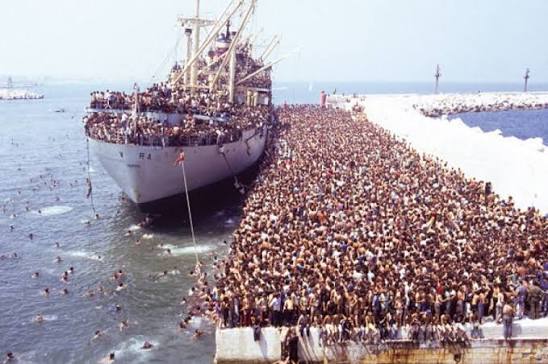
Albania’s relationship with its emigrants has never simply been geographical. The ties to their homeland are for millions of Albanians abroad deeply emotional, practical, and increasingly economic. Others who emigrated years ago or are younger generations born abroad still follow events in Albania with great interest. But they are interested in more than family and culture. It is also about investment, opportunities for returns, legal issues, and the way forward for the country.
The Albanian diaspora has become more visible in public debate in recent years. Migration is no longer about departure. It is also increasingly a story of return, of engagement and long-term contribution. Thousands of Albanians who carved lives for themselves in Greece, Italy, Germany, the United Kingdom, Switzerland, and the United States are finding new reasons to come home. Some are returning for good; others are investing money, helping relatives or making plans for a future where Albania will play a bigger role in their lives.
It is part of a bigger change in the way emigrants see their relationship with the country they left behind. Albania is not a home country that many think of anymore. It is a place of opportunity and memory and identity and sometimes of renewed ambition.
A Diaspora on the Move
The Albanian diaspora is one of the biggest in the Balkans. In many ways, migration has had a profound effect on Albanian society in recent decades. Many families left the country because of economic hardship, political uncertainty, and the search for a better quality of life. In return, emigrants sent financial support, assisted relatives, and kept strong emotional links with home. This bond has been an essential part of contemporary Albanian life.
Today, that link is changing. While many emigrants remain permanently outside the country, their involvement with Albania has become more active and strategic. They are not only sending remittances, but they are also asking how they can invest, register property, support businesses, or obtain documents for themselves and their children. Diaspora has become a source of talent, capital, and knowledge that can help Albania develop in new ways.
One of the most noticeable changes has been the increased presence of returnees. New data and public debate reveal many emigrants are opting to go back after years abroad. Some also return because they’ve reached retirement age and want to spend their later years near family. Others return because they say now Albania offers more favorable opportunities than before. Often, the return is for a combination of economic reason and emotional connection.
Return Is A Real Option..
Many emigrants used to believe that returning to Albania was difficult or impossible. Many of the émigrés have full lives abroad, with children,jobs,s, and property. But that perception is changing, albeit slowly. For some categories of returnees, Albania has become a more viable option thanks to economic development, digital access, betteinfrastructure,re, and the rise of remote work.
There are a number of reasons why the return of emigrants is important. It helps to offset the effects long-termmrm emigration, particularly amongst thworking-agege population. Secondly, many returnees bring home valuable work experiencsavings,ngs and practical skills acquired from living abroad. Third, they often have higher expectations of efficienctransparency,ncy and quality of service, which can help to drive local communities and institutions to change for the better.
A returning emigrant is not just a returning home. Often it is a family, bringing new habits, new outlooks, and a new standard of living. This can affect education, entrepreneurship, locculture,ure and even the way businesses conduct business. In this regard, return migration may have a bigger social impact.
But coming back is not always easy. The challenge of reintegration is still one of the biggest. Many returnees face challenges such as paperwork, employment, housing, access to healservices,ces and adjusting to administrative systems that may not be what they remember. So the experts say return should not be a symbolic issue but a practical one that comes with planning and clear policy.
Legal and management issues
For Albanians in the diaspora, the quality of their relationship with the homeland is often measured through legal and administrative issues. Residence permits, family papers, property ownership, registering children, citizenshprocedures,res and pension coordination are not fine print. They influence daily life, long-teplanning,ing and the ability to have a stable relationship with Albania.
This is especially the case in countries with large Albanian populations such as Greece and Italy. Many emigrants have lived and worked legally for years, raischildren,ren and established lives in these countries. They are also still concerned about their status in Albania, where property, famities,ies and the prospect of return in the future are major concerns.
Families often need clear and accessible information about documentatioregistration,ion and rights. When it’s hard to get this information or too complicated, the result is frustration and uncertainty. That is why many of the diaspora closely follow government announcements, migration policies, and bilateral agreements between Albania and the countries they live in.
The issue second-generationion emigrants is even more complicated. Many have a strong Albaniidentity butbut may not have the same paperworlanguage,age or legal ties to Albania that their parents had. This has led to a boom in interest in services and policies that help the younger generation to stay in touch with the country.
The economic potential of diaspora
One of the most unused strengths of the Albanian diaspora is the economic potential. For years, emigrants’ remittances have been a major contribution, sustaining families and improving living standards, helping to finance housineducation,ion and small business activity. But remittances are nowless significantess source of economic power than the diaspora.
Many emigrants have experience of competitive markets overseas. They know the business. They know the systems. They know what the customers want. Such knowledge can be a great help in Albania, a country where entrepreneurship is still developing and modernizing. Diaspora investors who direct funds to sectors such as agriculture, tourism, real estattechnology,ogy and services tend to bring not only monbut alsobut discipline and professional standards.
There is also increasing interest in diaspora-led investment in local projects. Some emigrants want to help out famibusinesses;es, others want to work in hospitality, constructiologistics,ics or digital services. Some young Albanian professionals from abroad are eyeing remote ventures that enable them to remain abroad but to engage in the Albanian economy.
That’s where policy comes in. If Albania wants to get more from its diaspora, it needs to make investment easier, motransparent,ent and more secure. This means simplifying procedures, cutting down bureaucracy, improving properdocumentation,ion and legal certainty. “There are many emigrants who are willing to invest, but they need to be sure that the process will be fair and efficient.
Family and Identity
But beyond economics and law, the emotional bond between emigrants and Albania is strong. For many families, the homeland remains the center of holidaymemories,ies and identity. Many children born abroad grow up with Albanian spoken at home, visiting grandparents in the summer, learning to associate Albania with tradition and belonging.
One of the strongest reasons for the continued close following of Albanian news by emigrants is this emotional attachment. What’s going on in their towns, how the economy is changing, what new opportunities are othere,ere and how the country is changing. It’s a personal interest but also a generational thing. There are many parents who want their children to remain in touch with their heritage.
Here, cultural identity matters. Language, food, music, famigatherings, andgs, regional traditions all keep the bond between emigrants and their homelands alive. Albania is still a presence in everyday conversations and family priorities, even for those who spend most of their lives abroad.
This is why the diaspora should not be seen as a remote audience by media outlets serving emigrants. It is an activknowledgeable,ble and emotionally involved community. It wants news that matters and news it can trust, written in a voice that respects its experience abroad and its love of Albania.
Why It Matters: News from the Diaspora
Writing content for Albanian emigrants is not a content strategy. It’s a way to serve an audience with real needs.” Diaspora readers want more thheadlines.nes They want contexexplanation,ion and practical value. They are concerned with the migration policy, news about traveling, issues of property, rights of families, busineopportunities, andes, any changes in Albania that may affect their future.
This is why diaspora news is one of the most exciting content categories for a site like albmag.net. Articles must be human, informative, and trustworthy. They should stay away from over-the-top language or fluff. Instead, they should provide clear reporting, usefbackground,und and thoughtful perspective.
Good diaspora coverage can also lead to better engagement. People abroad are more likely to come back to a website that regularly features topics they care about. That can drive traffic, time on page, repevisits,its along-termerm audience loyalty. But for publishers, this goes beyond a volume of content matter. It’s about building a home you can trust for news.
The Future Connected
In the years to come, the relationship between Albania and its emigrants will probably be even more important. As more Albanians travel abroad, the need to stay connected with news, services, digitplatforms,rms and investment channels will only increase. At the same time, Albania has a real opportunity to turn its diaspora into a strategic asset.
But that future is based on trust. Emigrants must feel welcomerespected,ted and supported in the decision to stay abroad, retuhome,ome or invest from afaIt dependsnds on how you tell it too. Albania and the Diaspora. This can be enhanced with good media coverage, availabservices,ces and clear information.
The Albanian diaspora is no afterthought. This is the present and the future of our country. Returninvestment,ent and engagemecontinueues grow,row and the link between the emigrant and home is more dynamic than ever. For Albania that link is more than a matter of memory. It is a route to developmenresilience,nce and long-term opportunity.
Albanian Emigrants Remain Deeply Connected to Home as New Opportunities Emerge
Published inshowbiz
Be First to Comment